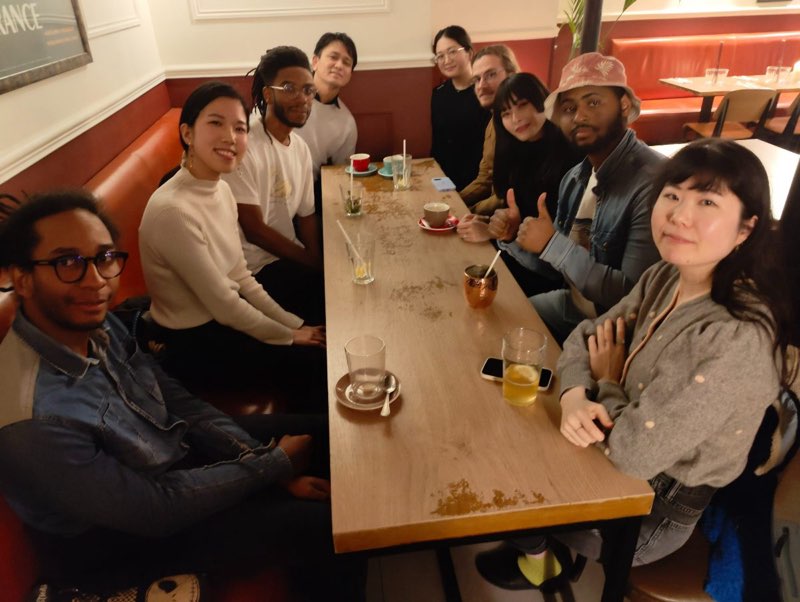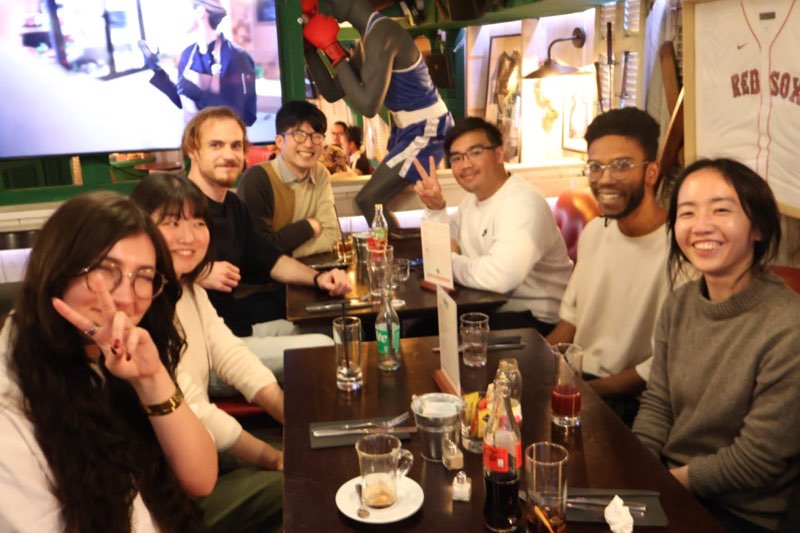

Lists of 400 language exchange questions are easy to find. What's harder to know is which ones actually get a conversation going, especially at a table of 4 to 8 people from two cultures. At Furamori we run in-person language exchanges every week, so this list starts with the topics we see work again and again at our tables, then adds questions for beginners and questions the whole table can answer. There are 88 in total.
The topics that work best at a real table
After many sessions, the same topics keep coming back:
- Where everyone grew up: hometowns, regional dialects and accents. Everyone has something to say about where they're from.
- Experiences of each other's culture: what surprised you, what you've adopted, what you miss from home.
- Learning languages itself: why you started, what's hard, your funniest mistakes, your tips. Everyone at the table is learning a language, so this one can run for a very long time.
- The city you live in: restaurant tips, favourite neighbourhoods, places only locals know.
- Travel: best trips, places to visit in each other's country.
Why do they work? Because people come to a language exchange with a real interest in the other language and culture. When a Japanese participant talks about their hometown, the French participant learning Japanese always has a question or a travel memory to add. The best topics are the ones where each side has something the other wants to know.
Where you grew up, and how people talk there
- Where did you grow up, and what's it like there?
- What's one thing every visitor should know about your hometown?
- Is there a dialect or accent where you're from? Can you say something in it?
- Which word or phrase only people from your region use?
- How do people from other regions tease your accent?
- What's your hometown famous for, food included?
- Would you ever move back? Why or why not?
- What did you do on weekends as a kid there?
- Is there a local festival or tradition you love?
- How is your hometown different from the city we're in now?
Living the other person's culture
- What surprised you most the first time you experienced this culture?
- Is there a habit here that you've adopted without noticing?
- What's something that's polite in your country but rude here, or the other way round?
- Have you ever made a cultural mistake? What happened?
- What do people from your country usually get wrong about this one?
- What do you miss most from home?
- Which holiday here would you like to experience, or have you already?
- How do friendships work differently here?
- What's the best thing about living between two cultures?
- If a friend from home visited, where would you take them first?
Learning languages (the topic that never runs out)
- Why did you start learning this language?
- What's the hardest part of my language for you?
- What's the funniest mistake you've made in a foreign language?
- How do you study: apps, classes, series, friends?
- Which word in your language do you think is impossible to translate?
- What's a word in my language you love the sound of?
- Do you feel like a different person when you speak another language?
- What advice would you give someone starting your language?
- When did you first feel you could really talk in a foreign language?
- Which other languages would you like to learn one day?

The city you live in
- What's your favourite restaurant in the city, and what should I order there?
- Which neighbourhood do you like most, and why?
- Where do you go when you want some quiet?
- What's a place tourists miss but locals love?
- What's the best café to read or study in?
- What's the one thing you'd change about this city?
- How long did it take you to feel at home here?
- Where would you go on a perfect Sunday here?
Travel
- What's the best trip you've ever taken?
- Where would you go if you could leave tomorrow?
- Which place in my country should I visit that isn't famous?
- Do you prefer cities, mountains or the sea?
- What's a travel disaster that makes a good story now?
- Do you travel alone or with others?
- What's a food you tried abroad and still think about?
- Which country's language would you learn just to travel there?
Food
- What dish from your country should everyone try once?
- What food here did you find strange at first?
- What do you eat when you're homesick?
- Can you cook something from your country? How?
- What's a typical breakfast where you're from?
- Is there a food rule in your culture that surprises people?
- What's the best street food you know?
- Sweet or savoury breakfast?

Daily life and work
- What do you do, and what do you like about it?
- How is work culture different between our countries?
- What does a normal weekday look like for you?
- What's something you only learned by living abroad?
- How do people usually spend their holidays where you're from?
- What's your dream job, if language wasn't a problem?
- How do people greet each other at work in your country?
- What's a small daily thing that makes you happy?
Series, music and hobbies
- Which series or film would you recommend to learn your language?
- What music do people your age listen to in your country?
- Is there a song everyone in your country knows by heart?
- What do you do in your free time?
- Which book or manga changed how you see things?
- Do you play a sport or an instrument?
- What's a hobby that's popular in your country but rare here?
- Karaoke: yes or no? What's your song?
If you're a beginner
Beginners are welcome at a language exchange, and what we see at our tables is reassuring: beginners speak a fair amount in their native language, try simple things like introducing themselves, and listen a lot. Listening to native speakers talk with each other is part of learning. The questions below are short enough to ask from your first weeks.
Simple questions to start with
- What's your name, and where are you from?
- How long have you lived here?
- Do you like it here?
- What do you like to eat?
- Do you have brothers or sisters?
- What do you do on weekends?
- Have you been to my country?
- How do you say this in your language?
- Can you speak a little more slowly, please?
- What does that word mean?
Questions for the whole table
In a group, the best questions aren't the ones you'd ask one person: they're the ones everyone can answer from their own culture. Each person gives their version, and the comparison does the rest.
Questions everyone answers
- How do you say 'cheers' where you're from?
- What's a typical birthday like in your country?
- What does your country say about people from ours?
- What's the first word you learned in each other's language?
- Which animal sounds are different in your language?
- What's a superstition from your country?
- What do people eat at New Year where you're from?
- Which gesture means something different in your culture?
Do some topics fall flat?
Honestly, we've rarely seen a topic go badly at our tables. What matters more is how you ask: open questions ("what's it like…", "how do people…") give everyone room to answer, while yes-or-no questions end the conversation. And if you want to go into heavier subjects, it's easier once people know each other a little.
How to use these questions
- Don't read the list at the table. Pick 2 or 3 topics you'd genuinely like to talk about before you go.
- Ask a follow-up. "Why?" and "what was that like?" turn one answer into a conversation.
- Answer your own question too. Sharing your version is what makes it an exchange, not an interview.
- Ask how to say things. "How do you say that in your language?" is a question every learner can use.

Practise them at a real table
These questions work best face to face. Furamori runs in-person language exchanges every week, with tables of 4 to 8 people put together in advance so each language has native speakers. See all Furamori cities, or read how a language exchange works before your first one.
Frequently asked questions
What should I talk about at a language exchange?
What are good language exchange questions for beginners?
What are good conversation topics for a group language exchange?
Are there topics to avoid at a language exchange?
Should I prepare questions before a language exchange?